
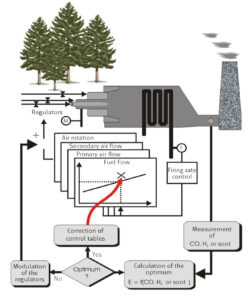
CO/H₂ Trim-Control
CO/H₂ control is a software module in all LAMTEC combustion management systems (CMS, BT300, ETAMATIC, etc.). In combination with the LAMTEC O₂/COe measuring system LT3-F/KS1D, fuel consumption and pollutants are reduced to a minimum, thus conserving resources and protecting the environment. The system is fail-safe (SIL2).
A modular CO/λ control system based on the LT3/KS1D has been developed for biomass combustion systems. For details, see Downloads.
A modular CO/λ control system based on the LT3/KS1D has been developed for biomass combustion systems. For details, see Downloads.
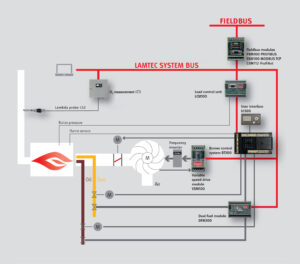
O₂ Trim-Control
The O₂ trim control is a software module of all LAMTEC burner management systems (CMS, BT300, ETAMATIC, etc.). It is used in combination with the LAMTEC O₂/exhaust gas measuring devices LT1, LT2, LT3, LT3-F, and NT1.
trim control optimizes combustion by regulating the oxygen content in the combustion process according to the optimum burner-specific O₂ setpoint, thereby compensating for disturbances affecting combustion…
trim control optimizes combustion by regulating the oxygen content in the combustion process according to the optimum burner-specific O₂ setpoint, thereby compensating for disturbances affecting combustion…